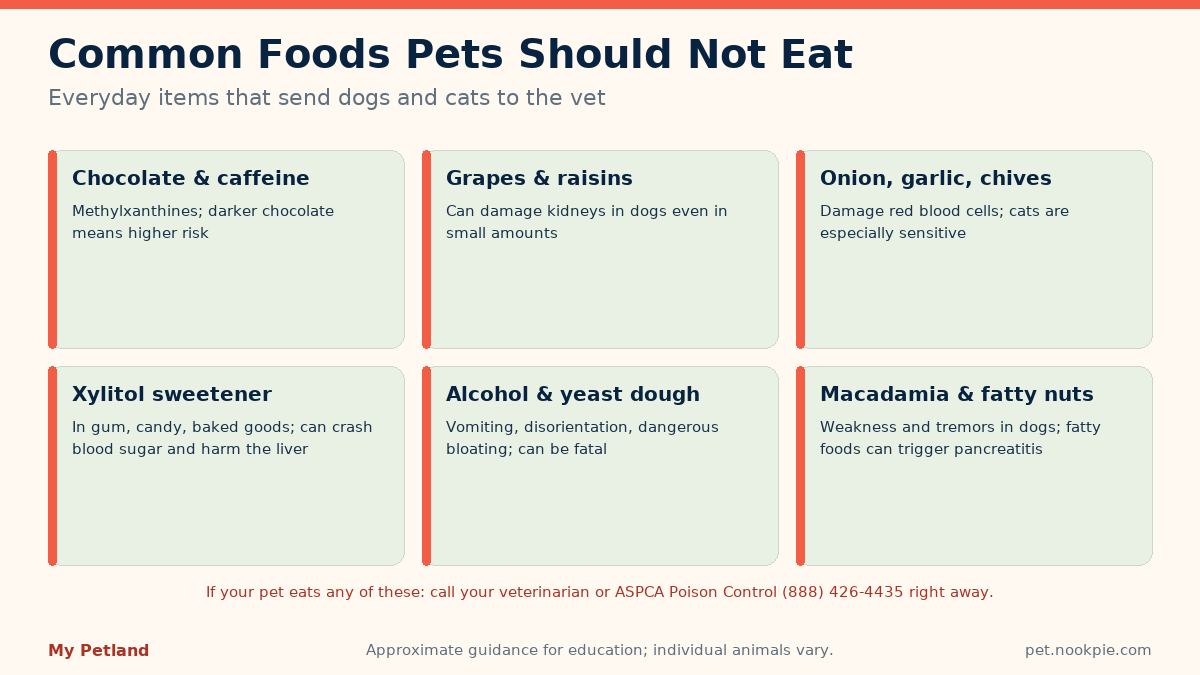
Most pet poisonings at home are not exotic — they are ordinary groceries. The ASPCA’s Animal Poison Control Center maintains a list of human foods pets should never eat, and it reads like a normal kitchen inventory: chocolate, grapes, onions, sweeteners, nuts. The danger is real precisely because these foods are always within reach.
If your pet has just eaten something on this list, do not wait for symptoms and do not try to induce vomiting on your own. Call your veterinarian or an animal poison control service immediately — the ASPCA Animal Poison Control Center (1-888-426-4435, consultation fee may apply) and the Pet Poison Helpline (1-855-764-7661) both operate around the clock. Knowing what was eaten, roughly how much, and when makes the call far more useful. Early action is the single biggest factor owners control.
Chocolate and caffeine
Chocolate contains theobromine and caffeine, which dogs and cats metabolize far more slowly than humans. Darker chocolate and baking chocolate carry the most per bite; white chocolate carries the least. Coffee beans, grounds, tea, and energy drinks belong in the same mental category. ASPCA lists the whole family as a firm no.
Grapes, raisins, and currants
Grapes and their dried forms can cause kidney failure in dogs, and the toxic mechanism is still not fully understood — there is no established safe amount, and individual dogs vary. A handful of raisins in a trail mix or a fruit bowl within counter-surfing range is a genuine emergency, not a “watch and wait.”
Onions, garlic, chives, and leeks
The entire allium family can damage red blood cells in both dogs and cats, leading to anemia. This applies raw, cooked, powdered, and dehydrated — which is why onion and garlic powder in leftovers, baby food, and seasoned meat are as relevant as the raw vegetables. Cats are especially sensitive.
Xylitol and other sweeteners
Xylitol, a sweetener common in sugar-free gum, candy, baked goods, some peanut butters, and some medications, can trigger a dangerous insulin release and liver injury in dogs. Check ingredient labels before sharing anything “sugar-free,” and never assume a product safe for people uses pet-safe sweeteners. ASPCA also flags that dogs are not reliably protected by the dose being small.
Alcohol and raw yeast dough
Alcoholic drinks, foods cooked with alcohol, and unbaked yeast dough are all on the ASPCA avoid list. Fermenting dough produces alcohol inside the stomach and can also expand dangerously. Even small amounts of alcohol affect pets far more than their size suggests.
Macadamia nuts and fatty, salty, or raw foods
Macadamia nuts cause a well-documented toxic reaction in dogs — weakness, tremors, and overheating — even though the amounts involved are modest. Beyond specific toxins, ASPCA advises against fatty trimmings and heavily salted foods (pancreatitis and sodium problems), and against raw or undercooked meat, eggs, and bones (bacterial contamination and physical injury from splinters).
Prevention beats the phone call
Store hazardous foods high or behind closed doors, treat the trash as part of the kitchen’s hazard zone, and brief guests and children — many poisonings come from a well-meaning visitor sharing a snack. A pet that has eaten something risky may look completely normal for hours; appearance is not evidence of safety.
If you are ever unsure whether a food is dangerous, treat “unsure” as “yes” until a veterinarian or poison control service says otherwise. Our guide on signs your pet needs a vet explains how to judge the response level once symptoms do appear.
Common questions
My dog ate a small amount of chocolate an hour ago and seems fine. What now? Call your veterinarian or a poison control service now, with the type of chocolate, the estimated amount, and your dog’s weight. “Seems fine” is expected early — waiting for symptoms gives away the window when help works best. Do not induce vomiting unless a professional instructs you to.
Is one grape really dangerous? There is no known safe amount of grapes or raisins for dogs, and reactions vary between individuals. Treat any ingestion as a reason to call, not to observe.
Are any human foods safe to share? Some plain, unseasoned foods are commonly considered acceptable in small amounts, but “safe” depends on the individual pet’s health, and seasoned or prepared versions change the answer. Ask your veterinary team which specific foods fit your pet rather than treating internet lists as permission.