Most shelter visits last minutes, and most adopters spend them falling in love — which is exactly why a short, deliberate health check matters. You cannot diagnose anything in a shelter corridor, and you should not try. What you can do is observe a handful of visible signs that the American Veterinary Medical Association (AVMA) lists as the marks of a healthy dog or cat, ask the right questions, and know what belongs to a veterinarian instead of to you.
Observation narrows the choice; it never replaces the veterinary exam that should follow adoption.
Eyes, nose, and ears
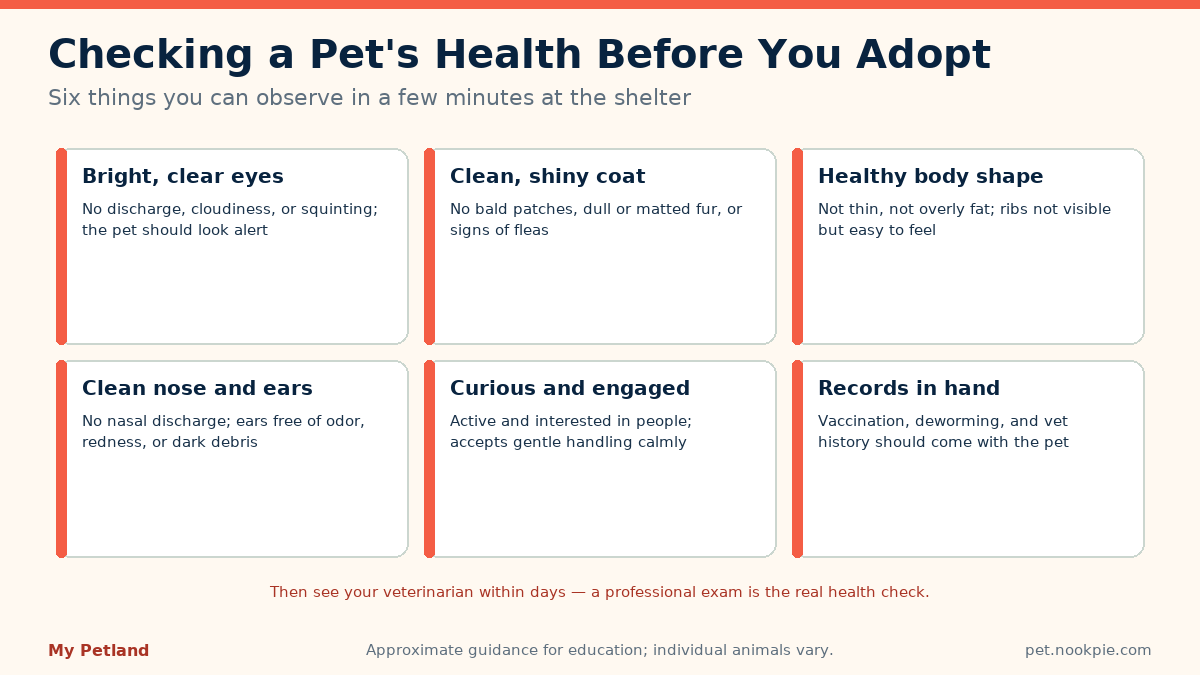
The AVMA describes a healthy dog or cat as having clear, bright eyes. Look for discharge, cloudiness, redness, or squinting. The nose should be free of discharge, and the ears clean — no strong odor, redness, or dark waxy debris. A pet sneezing once in a dusty room is not a finding; a pet with crusted eyes and persistent nasal discharge is one worth asking staff about.
Coat and body shape
A healthy coat is clean and reasonably shiny. Dull, matted, thinning, or patchy fur, and any sign of fleas, deserves a question. Body shape matters in both directions: the AVMA’s healthy standard is neither thin nor overly fat. You can get a rough feel for this in a minute — ribs should not be visible, but should be easy to feel under light pressure. Our guide to the body condition score explains the three hands-on checks if you want to do this properly.
Movement and breathing
Watch the pet move before you interact. Walking, standing, and sitting should look comfortable and symmetric — no limping, stiffness, or reluctance to bear weight. Breathing at rest should be quiet and effortless. Labored or noisy breathing at rest is never a “shelter stress” explanation to accept without a veterinary opinion.
Behavior and handling
The AVMA’s guidance is to look for an animal that is active, inquisitive, and — for dogs especially — friendly and unafraid, and that accepts gentle handling without aggression. For cats, an adult should allow petting without hissing or scratching, while recognizing that a noisy shelter suppresses normal behavior in many perfectly healthy animals. Ask staff what the pet is like in a quieter room or on a different day; behavior observed over days beats your five minutes.
Two age notes from the AVMA: puppies are ideally rehomed at eight to ten weeks, kittens at seven to nine — younger than that is a question, not a bonus.
Records and the questions to ask
A responsible shelter, rescue, or breeder hands over what they know: vaccination and deworming history, any treatment given, spay/neuter status, and microchip details. Ask directly:
- What veterinary care has this pet received here?
- Is anything under treatment or observation right now?
- Have you seen coughing, sneezing, vomiting, diarrhea, or appetite changes?
- For a puppy or kitten: can I see or learn about the mother and littermates?
Vague or missing answers are information too. Sellers of dogs may also have obligations under local pet purchase protection laws — know that they exist.
What you cannot check — and who can
Teeth, heart, joints, internal organs, and anything requiring a blood or fecal test are invisible in a corridor visit. That is why the AVMA advises scheduling a veterinary examination as soon as possible after adoption, bringing whatever records you received. Many shelters require or strongly encourage exactly this. Our guide on adopting a senior pet covers that first visit in more detail, and how often pets should see the vet sets the rhythm after it.
If the pet you love has a visible issue, the choice is rarely binary. Many shelter findings are minor and treatable — but the decision to take one on should be made with a veterinarian’s assessment and open eyes about what ongoing care involves, not with hope. If you are still weighing whether to adopt at all, our pre-adoption checklist walks through that decision honestly.
Common questions
Can I rely on my own observation instead of a vet exam? No. Observation helps you choose which pet to adopt, but only a veterinarian can examine the pet properly. Schedule a veterinary visit within the first days after adoption, even when the pet seems perfectly healthy.
The pet I like has runny eyes. Should I walk away? Not automatically. Mild, temporary issues are common in shelter environments. Ask the staff what they know, whether the pet is under treatment, and what the shelter veterinarian has said — then let your own veterinarian assess it at the first visit.
Is a shy or hiding pet unhealthy? Not necessarily. Shelters are noisy and unfamiliar, and many healthy animals shut down there. Calm withdrawal is a temperament clue, not a diagnosis. Distinguish behavior from physical signs like discharge, coat condition, and body shape, and ask staff how the pet behaves in quieter settings.